DJI Osmo Pocket 4P: Çift Kameralı Cep Gimbal'a Teknik Bakış
DJI'ın ilk çift kameralı cep gimbal'ı Osmo Pocket 4P'yi resmi teknik verileriyle inceledim: iki kamera, 4K/240fps ve 10-bit D-Log 2 içerik üretimine ne katıyor?
DJI Osmo Pocket 4P: A Technical Look at the Dual-Lens Pocket Gimbal
A technical look at the DJI Osmo Pocket 4P, DJI's first dual-lens pocket gimbal, based on official data: what two cameras, 4K/240fps and 10-bit D-Log 2 add to content creation.
DJI Osmo Pocket 4P: análisis técnico del gimbal de bolsillo con dos cámaras
Análisis técnico de la DJI Osmo Pocket 4P, el primer gimbal de bolsillo de DJI con dos cámaras, según sus datos oficiales: qué aportan 4K/240 fps y 10 bits D-Log 2.
DJI Osmo Pocket 4P: technischer Blick auf den Pocket-Gimbal mit zwei Kameras
Technischer Blick auf die DJI Osmo Pocket 4P, DJIs ersten Pocket-Gimbal mit zwei Kameras, anhand offizieller Daten: was 4K/240 fps und 10-Bit D-Log 2 bringen.
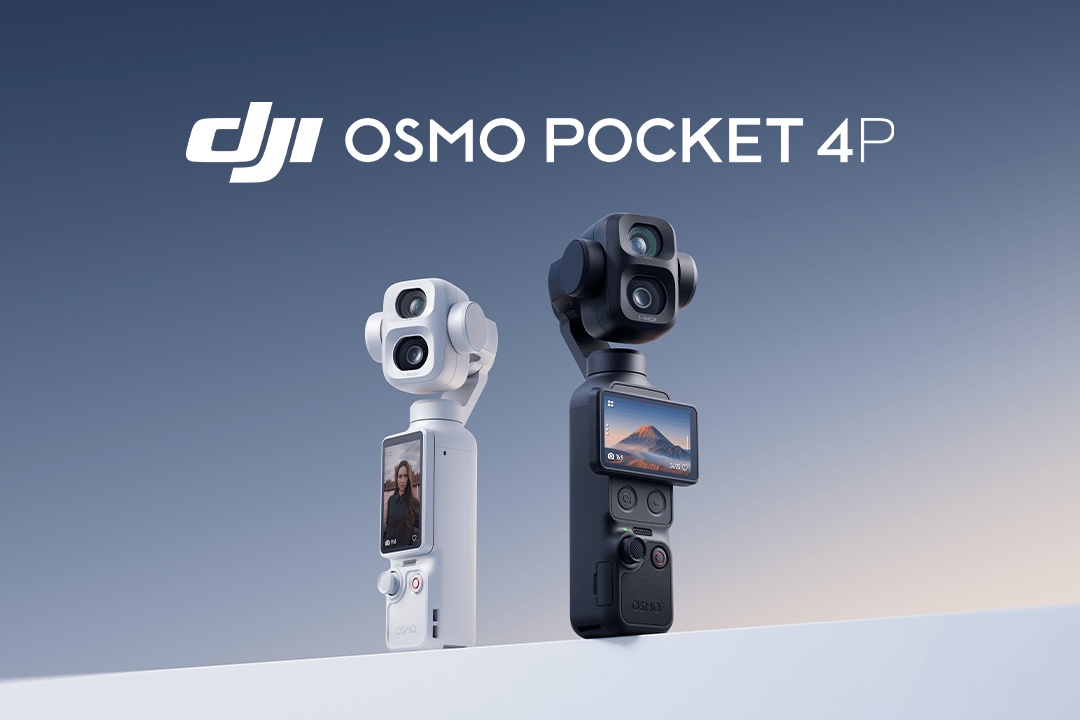
Cep boyutundaki gimbal kameralar, son yıllarda vlog, Reels ve kurumsal tanıtım çekimlerinin vazgeçilmez araçlarından biri hâline geldi. DJI'ın 30 Temmuz 2026'da duyurduğu Osmo Pocket 4P, bu kategoriye ilk kez ikinci bir kamera ekliyor. Bu yazıda cihazı, DJI'ın resmi teknik özellik sayfası ve basın duyurusundaki verilerle ele alıyor; sayıların bir video üreticisi için ne anlama geldiğini tartışıyorum. Cihazı henüz sahada test etmedim; buradaki değerlendirme üreticinin açıkladığı verilere dayanıyor.
İki kamera, iki farklı anlatım
Osmo Pocket 4P'nin ana kamerası 1 inç CMOS sensöre, 20 mm eşdeğer odak uzaklığına ve f/2.0 diyafram açıklığına sahip. İkinci kamera ise 1/1,28 inç sensörlü, 60 mm eşdeğer ve f/1.8 açıklıklı bir orta telefoto. DJI, bu ikiliyle 3× optik ve 12×'e kadar zoom sunduğunu belirtiyor.
Sinema dilinde 20 mm geniş bir bakış açısıdır: mekânı, çevreyi ve kameraya konuşan kişiyi birlikte gösterir. 60 mm ise daha dar bir kadraj verir; yüzler, ürün detayları ve röportaj planları için daha uygun bir perspektif sunar. Tek bir cihazda bu iki odak uzaklığını bulmak, aynı sahnede geniş plan ile yakın plan arasında objektif değiştirmeden geçebilmek anlamına geliyor.
Dinamik aralık ve renk: 17 stop ve 10-bit D-Log 2
DJI, ana kameranın 17 stop dinamik aralık sunduğunu ve bunu LOFIC adını verdiği sensör teknolojisine bağladığını açıklıyor. Fotoğrafçılıkta her bir stop, ışık miktarının iki katına karşılık gelir; dolayısıyla dinamik aralık, kameranın aynı karede en karanlık ve en parlak bölgeleri ne kadar geniş bir aralıkta kaydedebildiğinin ölçüsüdür. Pencere önünde çekilen bir röportaj ya da gün batımına karşı bir sahne, bu ölçünün doğrudan sınandığı durumlardır.
Cihaz 10-bit D-Log 2 renk profiliyle kayıt yapıyor. 10-bit kayıt, her renk kanalı için 1.024 ton düzeyi, toplamda bir milyarın üzerinde renk anlamına gelir. Log profiller görüntüyü düz ve soluk kaydeder; amaç, renk düzenleme (color grading) aşamasında ışık ve gölge bilgisini koruyarak daha esnek bir çalışma alanı bırakmaktır. Kurguda renk düzenlemesi yapan üreticiler için bu, cep boyutunda bir cihazdan alınabilecek en önemli özelliklerden biri.
Ağır çekim ve kayıt biçimi
Resmi verilere göre geniş açı kamera 4K çözünürlükte saniyede 240 kareye, orta telefoto kamera ise 4K'da saniyede 200 kareye kadar ağır çekim kaydedebiliyor. 240 karelik bir kayıt saniyede 30 kare oynatıldığında hareket sekiz kat yavaşlar; DJI'ın "8× ağır çekim" ifadesi de bu orana karşılık geliyor. Normal çekimde 4K ve 1080p, 60 kareye kadar destekleniyor; dikey içerik için 3K (9:16) seçeneği de bulunuyor. Video HEVC kodlamasıyla MP4 olarak, en fazla 180 Mbps bit hızında kaydediliyor.
Gövde, depolama ve enerji
- Ağırlık ve boyut: 230 g; 159,5 × 63,3 × 33,5 mm.
- Gimbal: 3 eksenli mekanik stabilizasyon; DJI, nesne takibi için ActiveTrack 8.0'ı öne çıkarıyor.
- Ekran: 2 inç dokunmatik, 1.000 nit parlaklık.
- Depolama: 103 GB dahili depolama; 1 TB'a kadar microSD desteği.
- Batarya: 1.545 mAh. DJI, 210 dakikalık çalışma süresini 25 °C'de, 1080p/24fps, Wi-Fi ve ekran kapalıyken yapılan testle veriyor; gerçek kullanımda süre ayarlara göre değişecektir.
- Şarj: Ayrıca satılan DJI 65 W şarj cihazıyla %80'e 18 dakikada, %100'e 32 dakikada.
- Fotoğraf: Yaklaşık 37 MP; JPEG ve DNG (RAW) biçimleri. DJI, her fotoğrafla birlikte 1,5 saniyelik 4K klip kaydeden "Live Photo" özelliğini de duyurdu.
DJI, 20 Ekim 2026'da cihazın inci beyazı (Pearl White) renk seçeneğini de küresel olarak satışa sundu; duyuruya göre bu sürüm aynı özelliklere sahip, yalnızca yüzey kaplaması farklı.
Pratikte ne anlama geliyor?
Kâğıt üzerindeki veriler, Osmo Pocket 4P'yi özellikle şu kullanımlar için güçlü bir aday hâline getiriyor:
- Tek kişilik prodüksiyonlar: Geniş ve yakın planı aynı cihazla, objektif değiştirmeden çekebilmek.
- Renk düzenlemesi yapılan işler: 10-bit D-Log 2 ile kurumsal tanıtım ve marka içeriklerinde daha esnek bir post-prodüksiyon.
- Sosyal medya üretimi: Dikey 3K kayıt, ağır çekim ve hızlı şarj, Reels ve kısa video akışına uygun.
Bununla birlikte, üreticinin açıkladığı değerler kontrollü koşullarda ölçülür. Dinamik aralığın, orta telefoto kameranın düşük ışıktaki performansının ve bataryanın gerçek çekim koşullarında nasıl davrandığı, ancak sahada yapılacak testlerle netleşir. Ekipman seçerken teknik tablonun yanında kendi çekim senaryonuzu da ölçüt almanızı öneririm.
Video ve sosyal medya projeleriniz için ekipman ve çekim planlamasında destek almak isterseniz ardasofraci.com üzerinden bana ulaşabilirsiniz.
Pocket-sized gimbal cameras have become essential tools for vlogs, Reels and corporate promos in recent years. The Osmo Pocket 4P, announced by DJI on 30 July 2026, adds a second camera to this category for the first time. In this article I look at the device using the data on DJI's official specifications page and press release, and discuss what the numbers mean for a video creator. I have not yet tested the device in the field; this assessment is based on the manufacturer's published data.
Two cameras, two ways of telling a story
The Osmo Pocket 4P's main camera has a 1-inch CMOS sensor, a 20 mm equivalent focal length and an f/2.0 aperture. The second camera is a medium telephoto with a 1/1.28-inch sensor, a 60 mm equivalent focal length and an f/1.8 aperture. DJI states that the pair offers 3× optical and up to 12× zoom.
In film language, 20 mm is a wide view: it shows the space, the surroundings and the person speaking to camera together. 60 mm gives a tighter frame and a more suitable perspective for faces, product details and interview shots. Having both focal lengths in one device means moving between a wide shot and a close-up in the same scene without changing lenses.
Dynamic range and colour: 17 stops and 10-bit D-Log 2
DJI states that the main camera offers 17 stops of dynamic range and attributes this to a sensor technology it calls LOFIC. In photography each stop represents a doubling of light, so dynamic range measures how wide a span, from the darkest to the brightest areas of the same frame, a camera can record. An interview in front of a window or a scene shot against the sunset puts this measure directly to the test.
The device records with the 10-bit D-Log 2 colour profile. 10-bit recording means 1,024 tonal levels per colour channel and more than a billion colours in total. Log profiles record a flat, desaturated image; the aim is to preserve highlight and shadow information and leave more room to work during colour grading. For creators who grade in post, this is one of the most important features a pocket-sized device can offer.
Slow motion and recording format
According to the official data, the wide-angle camera can record slow motion at up to 240 frames per second in 4K, and the medium telephoto camera at up to 200 frames per second in 4K. When 240 fps footage is played back at 30 fps, motion is slowed eight times, which is what DJI's "8× slow motion" refers to. Standard recording supports 4K and 1080p at up to 60 fps, and there is also a 3K (9:16) option for vertical content. Video is recorded as MP4 with HEVC encoding at a maximum bitrate of 180 Mbps.
Body, storage and power
- Weight and size: 230 g; 159.5 × 63.3 × 33.5 mm.
- Gimbal: 3-axis mechanical stabilisation; DJI highlights ActiveTrack 8.0 for subject tracking.
- Screen: 2-inch touchscreen, 1,000 nits brightness.
- Storage: 103 GB built-in storage; microSD support up to 1 TB.
- Battery: 1,545 mAh. DJI quotes 210 minutes of operating time, measured at 25 °C at 1080p/24fps with Wi-Fi and the screen off; real-world runtime will vary with settings.
- Charging: 80% in 18 minutes and 100% in 32 minutes with the DJI 65 W charger, sold separately.
- Photo: Approx. 37 MP; JPEG and DNG (RAW). DJI also announced a "Live Photo" feature that records a 1.5-second 4K clip with every photo.
On 20 October 2026 DJI also released a Pearl White colour option worldwide; according to the announcement it has the same capabilities and differs only in its finish.
What does this mean in practice?
On paper, the data makes the Osmo Pocket 4P a strong candidate especially for:
- One-person productions: shooting wide and close-up with the same device, without changing lenses.
- Work that is colour graded: more flexible post-production for corporate and brand content with 10-bit D-Log 2.
- Social media production: vertical 3K recording, slow motion and fast charging suit a Reels and short-video workflow.
That said, manufacturer figures are measured under controlled conditions. How the dynamic range, the medium telephoto camera in low light and the battery behave under real shooting conditions only becomes clear through field tests. When choosing equipment, I recommend weighing your own shooting scenarios alongside the specification sheet.
If you would like support with equipment and shoot planning for your video and social media projects, you can reach me via ardasofraci.com.
Las cámaras con gimbal de bolsillo se han convertido en los últimos años en una herramienta imprescindible para vlogs, Reels y vídeos corporativos. La Osmo Pocket 4P, anunciada por DJI el 30 de julio de 2026, añade por primera vez una segunda cámara a esta categoría. En este artículo analizo el dispositivo con los datos de la página oficial de especificaciones y del comunicado de prensa de DJI, y explico qué significan esas cifras para quien produce vídeo. Todavía no lo he probado en rodaje; esta valoración se basa en los datos publicados por el fabricante.
Dos cámaras, dos formas de contar
La cámara principal de la Osmo Pocket 4P tiene un sensor CMOS de 1 pulgada, una distancia focal equivalente de 20 mm y una apertura f/2.0. La segunda es un teleobjetivo medio con sensor de 1/1,28 pulgadas, 60 mm equivalentes y apertura f/1.8. Según DJI, el conjunto ofrece zoom óptico de 3× y hasta 12× de zoom.
En lenguaje cinematográfico, 20 mm es un ángulo amplio: muestra el espacio, el entorno y a la persona que habla a cámara a la vez. 60 mm ofrece un encuadre más cerrado y una perspectiva más adecuada para rostros, detalles de producto y planos de entrevista. Tener ambas focales en un solo dispositivo permite pasar de un plano general a un primer plano en la misma escena sin cambiar de objetivo.
Rango dinámico y color: 17 pasos y D-Log 2 de 10 bits
DJI indica que la cámara principal ofrece 17 pasos de rango dinámico y lo atribuye a una tecnología de sensor que denomina LOFIC. En fotografía, cada paso equivale a duplicar la cantidad de luz; el rango dinámico mide, por tanto, la amplitud con la que una cámara registra en un mismo fotograma las zonas más oscuras y las más brillantes. Una entrevista frente a una ventana o una escena a contraluz al atardecer ponen a prueba directamente esta medida.
El dispositivo graba con el perfil de color D-Log 2 de 10 bits. La grabación en 10 bits supone 1.024 niveles tonales por canal de color y, en total, más de mil millones de colores. Los perfiles Log registran una imagen plana y apagada; el objetivo es conservar la información de luces y sombras y dejar más margen en la etapa de etalonaje (color grading). Para quien corrige el color en postproducción, es una de las características más importantes que puede ofrecer un dispositivo de bolsillo.
Cámara lenta y formato de grabación
Según los datos oficiales, la cámara gran angular puede grabar cámara lenta en 4K hasta 240 fotogramas por segundo, y el teleobjetivo medio, en 4K hasta 200. Cuando una grabación a 240 fps se reproduce a 30 fps, el movimiento se ralentiza ocho veces, que es a lo que se refiere la «cámara lenta 8×» de DJI. En grabación normal admite 4K y 1080p hasta 60 fps, y ofrece una opción 3K (9:16) para contenido vertical. El vídeo se graba en MP4 con codificación HEVC, con una tasa máxima de 180 Mbps.
Cuerpo, almacenamiento y energía
- Peso y tamaño: 230 g; 159,5 × 63,3 × 33,5 mm.
- Gimbal: estabilización mecánica de 3 ejes; DJI destaca ActiveTrack 8.0 para el seguimiento de sujetos.
- Pantalla: táctil de 2 pulgadas y 1.000 nits de brillo.
- Almacenamiento: 103 GB internos; compatibilidad con microSD de hasta 1 TB.
- Batería: 1.545 mAh. DJI indica 210 minutos de autonomía, medidos a 25 °C en 1080p/24 fps con wifi y pantalla apagados; en uso real, la duración variará según los ajustes.
- Carga: 80 % en 18 minutos y 100 % en 32 minutos con el cargador DJI de 65 W, que se vende por separado.
- Foto: aprox. 37 MP; formatos JPEG y DNG (RAW). DJI también anunció «Live Photo», que graba un clip 4K de 1,5 segundos con cada foto.
El 20 de octubre de 2026 DJI lanzó además en todo el mundo el color blanco perla (Pearl White); según el anuncio, tiene las mismas prestaciones y solo cambia el acabado.
¿Qué significa en la práctica?
Sobre el papel, los datos convierten la Osmo Pocket 4P en una candidata sólida sobre todo para:
- Producciones de una sola persona: grabar planos generales y cercanos con el mismo dispositivo, sin cambiar de objetivo.
- Trabajos con etalonaje: una postproducción más flexible para contenido corporativo y de marca con D-Log 2 de 10 bits.
- Producción para redes sociales: la grabación vertical 3K, la cámara lenta y la carga rápida encajan con un flujo de Reels y vídeo corto.
Aun así, las cifras del fabricante se miden en condiciones controladas. Cómo se comportan el rango dinámico, el teleobjetivo medio con poca luz y la batería en un rodaje real solo se aclara con pruebas de campo. Al elegir equipo, recomiendo tener en cuenta los propios escenarios de grabación además de la ficha técnica.
Si quieres apoyo en la elección de equipo y la planificación de rodajes para tus proyectos de vídeo y redes sociales, puedes contactarme en ardasofraci.com.
Gimbal-Kameras im Taschenformat sind in den letzten Jahren zu einem unverzichtbaren Werkzeug für Vlogs, Reels und Unternehmensvideos geworden. Die Osmo Pocket 4P, die DJI am 30. Juli 2026 angekündigt hat, ergänzt diese Kategorie erstmals um eine zweite Kamera. In diesem Beitrag betrachte ich das Gerät anhand der Daten auf DJIs offizieller Spezifikationsseite und in der Pressemitteilung und ordne ein, was die Zahlen für Videoproduzenten bedeuten. Ich habe das Gerät noch nicht im Einsatz getestet; die Einschätzung beruht auf den veröffentlichten Herstellerangaben.
Zwei Kameras, zwei Erzählweisen
Die Hauptkamera der Osmo Pocket 4P hat einen 1-Zoll-CMOS-Sensor, eine äquivalente Brennweite von 20 mm und Blende f/2.0. Die zweite Kamera ist ein mittleres Tele mit 1/1,28-Zoll-Sensor, 60 mm äquivalenter Brennweite und Blende f/1.8. Laut DJI bietet das Duo 3-fachen optischen und bis zu 12-fachen Zoom.
In der Filmsprache ist 20 mm ein weiter Blickwinkel: Er zeigt Raum, Umgebung und die Person, die in die Kamera spricht, gemeinsam. 60 mm liefert einen engeren Ausschnitt und eine passendere Perspektive für Gesichter, Produktdetails und Interviewaufnahmen. Beide Brennweiten in einem Gerät zu haben bedeutet, in derselben Szene ohne Objektivwechsel zwischen Totale und Nahaufnahme wechseln zu können.
Dynamikumfang und Farbe: 17 Blendenstufen und 10-Bit D-Log 2
DJI gibt für die Hauptkamera 17 Blendenstufen Dynamikumfang an und führt dies auf eine Sensortechnologie zurück, die das Unternehmen LOFIC nennt. In der Fotografie entspricht jede Blendenstufe einer Verdopplung der Lichtmenge; der Dynamikumfang beschreibt also, wie weit die Spanne zwischen den dunkelsten und hellsten Bereichen ist, die eine Kamera im selben Bild aufzeichnen kann. Ein Interview vor einem Fenster oder eine Szene im Gegenlicht des Sonnenuntergangs stellen genau diesen Wert auf die Probe.
Das Gerät zeichnet im 10-Bit-Farbprofil D-Log 2 auf. 10-Bit-Aufnahmen bedeuten 1.024 Tonwerte pro Farbkanal und insgesamt über eine Milliarde Farben. Log-Profile zeichnen ein flaches, entsättigtes Bild auf; Ziel ist es, Lichter- und Schatteninformationen zu erhalten und beim Color Grading mehr Spielraum zu lassen. Für alle, die in der Postproduktion Farbe korrigieren, ist das eine der wichtigsten Eigenschaften, die ein Gerät im Taschenformat bieten kann.
Zeitlupe und Aufnahmeformat
Laut den offiziellen Daten zeichnet die Weitwinkelkamera Zeitlupe in 4K mit bis zu 240 Bildern pro Sekunde auf, das mittlere Tele in 4K mit bis zu 200. Wird eine 240-fps-Aufnahme mit 30 fps abgespielt, verlangsamt sich die Bewegung um das Achtfache – darauf bezieht sich DJIs Angabe „8-fache Zeitlupe“. Im Normalmodus werden 4K und 1080p mit bis zu 60 fps unterstützt; für Hochformat-Inhalte gibt es zudem 3K (9:16). Videos werden als MP4 mit HEVC-Codierung und maximal 180 Mbit/s gespeichert.
Gehäuse, Speicher und Energie
- Gewicht und Maße: 230 g; 159,5 × 63,3 × 33,5 mm.
- Gimbal: mechanische 3-Achsen-Stabilisierung; DJI hebt ActiveTrack 8.0 für die Motivverfolgung hervor.
- Display: 2-Zoll-Touchscreen mit 1.000 Nits Helligkeit.
- Speicher: 103 GB intern; microSD-Unterstützung bis 1 TB.
- Akku: 1.545 mAh. DJI nennt 210 Minuten Laufzeit, gemessen bei 25 °C in 1080p/24 fps mit ausgeschaltetem WLAN und Display; im Praxiseinsatz hängt die Laufzeit von den Einstellungen ab.
- Laden: 80 % in 18 Minuten, 100 % in 32 Minuten mit dem separat erhältlichen DJI-65-W-Ladegerät.
- Foto: ca. 37 MP; JPEG und DNG (RAW). DJI kündigte außerdem „Live Photo“ an, das zu jedem Foto einen 1,5-sekündigen 4K-Clip aufnimmt.
Am 20. Oktober 2026 brachte DJI zudem weltweit die Farbvariante Perlweiß (Pearl White) auf den Markt; laut Ankündigung bietet sie dieselben Funktionen und unterscheidet sich nur in der Oberfläche.
Was bedeutet das in der Praxis?
Auf dem Papier machen die Daten die Osmo Pocket 4P vor allem für folgende Einsätze zu einer starken Option:
- Ein-Personen-Produktionen: Totale und Nahaufnahme mit demselben Gerät, ohne Objektivwechsel.
- Projekte mit Color Grading: flexiblere Postproduktion für Unternehmens- und Markeninhalte dank 10-Bit D-Log 2.
- Social-Media-Produktion: 3K im Hochformat, Zeitlupe und schnelles Laden passen zu einem Workflow mit Reels und Kurzvideos.
Herstellerangaben werden allerdings unter kontrollierten Bedingungen gemessen. Wie sich Dynamikumfang, das mittlere Tele bei wenig Licht und der Akku unter realen Drehbedingungen verhalten, zeigen erst Praxistests. Bei der Wahl der Ausrüstung empfehle ich, neben dem Datenblatt auch die eigenen Drehszenarien als Maßstab zu nehmen.
Wenn Sie Unterstützung bei Ausrüstung und Drehplanung für Ihre Video- und Social-Media-Projekte wünschen, erreichen Sie mich über ardasofraci.com.